Concrete Driveways in Logan, Utah
New installs, full replacements and widenings — engineered to handle Cache Valley’s freeze-thaw winters without cracking or heaving. Tell us about your project and we’ll work to connect you with a licensed local concrete contractor.
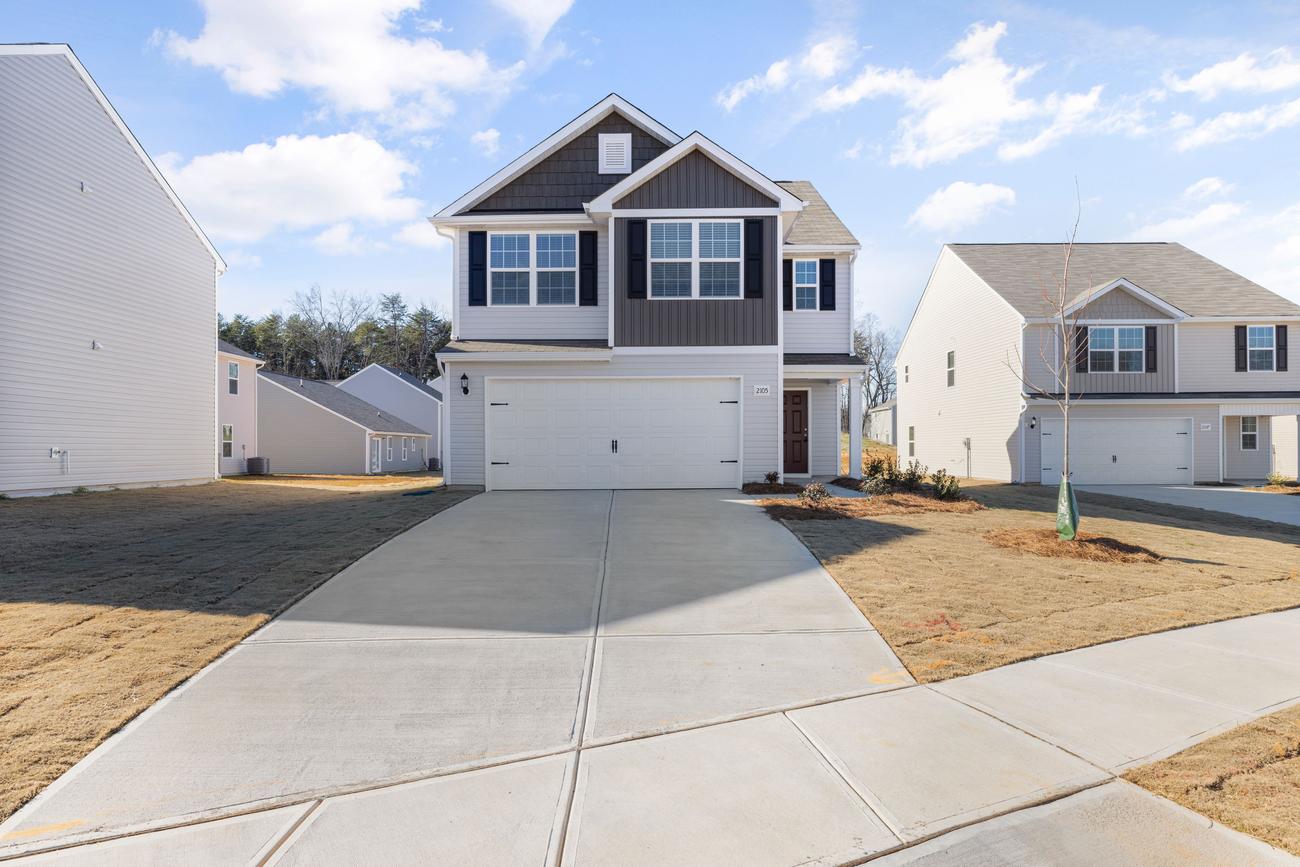
Concrete Driveways Built for Cache Valley Winters
A driveway in Cache Valley takes a beating. Between heavy snow load, road salt, and the constant freeze-and-thaw that runs from fall through spring, a poorly poured slab can crack, spall, or heave within just a few seasons. The difference between a driveway that lasts 5 years and one that lasts 30 comes down to what happens before the concrete is ever poured — the base prep, drainage, slab thickness, reinforcement, the air-entrained mix, and properly placed control joints.
Cache County Concrete helps homeowners and builders across Logan, North Logan, Smithfield, Providence, Hyrum, Nibley, Hyde Park, Wellsville and the surrounding Cache Valley communities find licensed local contractors who install residential and commercial driveways — and build each one specifically for our local climate, not from a generic template.
Driveway Services Local Contractors Offer
- New driveway installation — for new builds or first-time concrete.
- Driveway replacement — full tear-out and repour of cracked or failing slabs.
- Widening & extensions — more room for a second car, RV, boat or trailer.
- Decorative driveways — stamped, colored or exposed-aggregate finishes.
- Aprons & approaches — the transition where your driveway meets the street.
- RV & equipment pads — thicker, reinforced slabs built for heavy loads.
What Does a Concrete Driveway Cost in Logan?
It’s the first question almost everyone asks, and the honest answer is that it depends on your specific project. As a rough guide, most residential concrete driveways in the Cache Valley area run somewhere around $7 to $13 per square foot installed for a standard finish, which puts a typical two-car driveway in the low-to-mid four figures. A simple slab on a well-prepped lot costs less; decorative finishes cost more.
The biggest factors that move the price up or down are:
- Square footage — the single largest driver of total cost.
- Slab thickness — 4″ for cars vs. 5–6″ for trucks, RVs and trailers.
- Tear-out — removing and hauling away an old driveway adds labor and disposal.
- Site & base prep — grading, drainage, and how much gravel base your soil needs.
- Reinforcement — rebar or wire mesh sized to the load.
- Finish — broom is the most affordable; stamped, colored and exposed-aggregate cost more.
Because every lot and soil type is different, the only way to get a real number is an on-site look. The licensed contractor you’re referred to provides a clear, written quote for free — no guessing over the phone and no obligation.
The Driveway Installation Process
“Pouring concrete” is the easy part — the longevity is in the steps most people never see. Here’s how a good contractor builds a driveway that holds up to Utah winters:
- Free on-site quote. The contractor measures, checks your soil and drainage, talks through finishes, and gives you a written price.
- Excavation & grading. Old concrete or sod is removed, then the site is graded so water drains away from your home and slab.
- Compacted gravel base. Concrete should never sit on bare dirt. A gravel sub-base is laid and mechanically compacted so the slab won’t settle.
- Forming. Forms are set to the right slope and dimensions for clean edges and proper runoff.
- Reinforcement. Rebar or mesh is placed and sized to the load, with extra reinforcement where heavy vehicles park.
- Pour & finish. An air-entrained mix (critical for freeze-thaw) is poured, then floated and finished in your chosen texture.
- Control joints. Joints are cut at the correct spacing so the slab cracks where the contractor decides, not randomly across your driveway.
- Curing & sealing. Proper curing — which in our dry climate is what protects the surface — followed by a sealer to resist salt and moisture.
Driveway Finish Options
- Broom finish — the classic, slip-resistant, most affordable standard.
- Stamped concrete — the look of pavers, brick or natural stone in one solid slab. See the stamped concrete page.
- Exposed aggregate — durable, textured, and excellent for traction on sloped driveways.
- Colored / integral stain — earth tones that complement your home and hide surface wear.
Repair or Replace? Signs Your Driveway Is Failing
Not every driveway needs a full tear-out. Hairline cracks and minor settling can often be fixed. But it’s usually time to replace when you see deep or widening cracks, large sunken sections, surface spalling (the top layer flaking off), or water that now pools toward your garage or foundation. If your slab has simply sunk but is otherwise solid, concrete leveling and repair may save you money over a full replacement — a good contractor will give you an honest recommendation either way.
Making Your New Driveway Last
A quality pour is most of the battle, but a little maintenance goes a long way in our climate. Reseal your driveway every few years to keep moisture and salt out of the surface, go easy on harsh deicers (especially the first winter — they accelerate spalling), and keep standing water from collecting on or beside the slab. Done right, a concrete driveway here regularly lasts 25–30 years or more.
Driveway FAQ
How much does a concrete driveway cost in Logan, UT?
Most standard residential driveways run roughly $7–$13 per square foot installed, so a typical two-car driveway lands in the low-to-mid four figures. Square footage, thickness, tear-out, base prep, reinforcement and finish all affect the final price, and a broom finish costs less than stamped or colored concrete. The contractor provides a free written quote after seeing the site.
How thick should my driveway be?
Four inches is standard for passenger vehicles. Five to six inches is recommended anywhere trucks, RVs or trailers will sit. Base prep and reinforcement matter just as much as thickness for surviving freeze-thaw.
How long does a concrete driveway last in Utah?
A properly installed, sealed concrete driveway commonly lasts 25–30 years or more here — often outlasting asphalt by a wide margin. The keys are good base prep, an air-entrained mix, correct joints, and occasional resealing.
Does the contractor remove my old driveway?
Yes. Full tear-out and haul-away of the old slab is part of a replacement, and the base is re-prepped and compacted before pouring the new driveway — a good contractor never pours over a failing slab or bare dirt.
How long does the job take?
Most residential driveways take about 2 to 4 days of on-site work. You can usually walk on the new slab within a day, then wait while it cures to full strength before driving on it.
When is the best time to pour in Utah?
Late spring through early fall is ideal, while temperatures stay above freezing during curing. Pouring in cooler weather is possible with blankets and mix adjustments, but pouring into a hard freeze is avoided.
How soon can I drive on it?
Walk on it after about 24 hours, drive a car on it after roughly 7 days, and wait around 28 days before parking heavy vehicles so it reaches full strength.
Do I need a permit for a driveway in Logan?
It varies by city. Many projects — especially a new approach where the driveway meets the public street — require a permit, while a straight replacement on existing private property often doesn’t. Your contractor can tell you what your specific project needs.
Concrete or asphalt — which is better here?
Both work, but concrete typically lasts longer, handles our freeze-thaw and summer heat with less rutting, needs less frequent maintenance, and adds more resale value. Asphalt is usually cheaper up front. For most Cache Valley homeowners, concrete is the better long-term value.
Please note: Cache County Concrete is a free lead-referral and information service, not a licensed contractor, and does not perform concrete work. All quotes and work are provided by independent, licensed local contractors. Verify licensing and insurance directly with the contractor before any work begins.
Ready for a New Driveway?
Tell us about your project and we’ll work to connect you with a licensed local concrete contractor in Logan or anywhere in Cache Valley for a free, no-obligation quote.